


Arizona Water Storage Tank Sizing: An Expert Guide
Water storage tank sizing is one of the most important decisions for Arizona property owners planning residential, agricultural, commercial, or emergency water systems. Choosing the right tank size affects water availability, system efficiency, long term operating costs, and overall property preparedness.
In Arizona, factors such as drought conditions, rural property infrastructure, well production, livestock needs, fire protection requirements, and water delivery schedules all influence how much water storage capacity a property may require. A tank that is too small can create supply issues during periods of high demand, while oversized systems may increase unnecessary installation and equipment costs.
“At Living Water Industries, one of the most common questions we hear is ‘How much water storage do I actually need?’ The answer depends on how the property uses water, how reliable the water source is, and how much reserve capacity the owner wants for emergencies or long term storage.”
For Arizona property owners, understanding the factors that influence water storage requirements helps create a more reliable and efficient long term water management plan. Property owners can also explore additional water storage services to better understand system planning, installation, and long-term water management solutions.
How Water Storage Tank Sizing Is Calculated
Water storage sizing typically begins by estimating total daily water demand based on the type of property and how water is being used throughout the day.
For residential properties, sizing considerations may include:
- Number of occupants
- Daily household water usage
- Irrigation demand
- Backup emergency storage
- Well recovery rates
- Water delivery schedules
A common residential estimate in Arizona is approximately 75 to 100 gallons of water usage per person per day, although actual demand can vary depending on the property and lifestyle needs.
| Property Type | Typical Estimated Water Storage Range |
|---|---|
| Small residential home | 1,500 to 3,000 gallons |
| Larger residential property | 3,000 to 10,000 gallons |
| Rural or off grid property | 5,000 to 20,000+ gallons |
| Agricultural applications | 10,000 to 50,000+ gallons |
| Fire protection reserve systems | Varies based on local requirements |
For many Arizona properties, additional reserve capacity is often recommended to help account for drought conditions, emergency water needs, delivery delays, or inconsistent well production. Many property owners also invest in emergency water storage tanks to improve preparedness during power outages, drought conditions, and supply interruptions.
Simple Residential Water Storage Estimate Example
A simple way to estimate residential water storage needs is to calculate average daily household water usage and then add additional reserve capacity for emergencies or supply interruptions.
| Household Size | Estimated Daily Water Usage |
|---|---|
| 2 people | 150 to 200 gallons |
| 4 people | 300 to 400 gallons |
| 6 people | 450 to 600 gallons |
For example, a four person household using approximately 350 gallons per day may require significantly more storage capacity if the property also relies on irrigation, hauled water delivery, or emergency reserve planning.
In many Arizona rural properties, homeowners choose larger storage systems to prepare for drought conditions, delayed water deliveries, or inconsistent well production.
What Factors Affect Water Storage Needs in Arizona?
Arizona’s climate and infrastructure conditions create unique challenges for long term water storage planning. High temperatures, drought conditions, evaporation, and remote property locations often require larger reserve capacity compared to other regions.
Several factors commonly affect tank sizing decisions:
- Rural property access
- Well production rates
- Seasonal water demand
- Livestock or irrigation use
- Fire suppression requirements
- Emergency preparedness goals
- Municipal or hauled water delivery schedules
In many rural Arizona properties, water storage systems are sized not only for daily use, but also to provide reserve capacity during pump failures, drought restrictions, power outages, or delayed water deliveries.
Why Water Demand and Supply Reliability Both Matter
Water storage sizing is not based on daily water usage alone. In many Arizona properties, system reliability is just as important as total consumption. Properties that depend on hauled water delivery, low-producing wells, seasonal irrigation demand, or backup emergency storage often require significantly larger reserve capacity than standard residential estimates.
For example, properties with inconsistent well recovery rates may require additional storage to maintain stable water availability during peak demand periods. Agricultural properties may also require reserve capacity for livestock, irrigation scheduling, or emergency fire protection planning.
In rural Arizona environments, properly sized water storage systems are often designed around long-term reliability and infrastructure stability rather than short-term daily consumption alone.
Choosing the Right Water Storage Tank for Arizona Conditions
Tank material, installation location, UV exposure, and long term durability all play important roles in Arizona water storage performance.
| Tank Type | Common Benefits |
|---|---|
| Steel tanks | High durability and long term structural strength |
| Polyethylene tanks | Corrosion resistance and lower installation weight |
| Bolted storage tanks | Large capacity customization for commercial or agricultural systems |
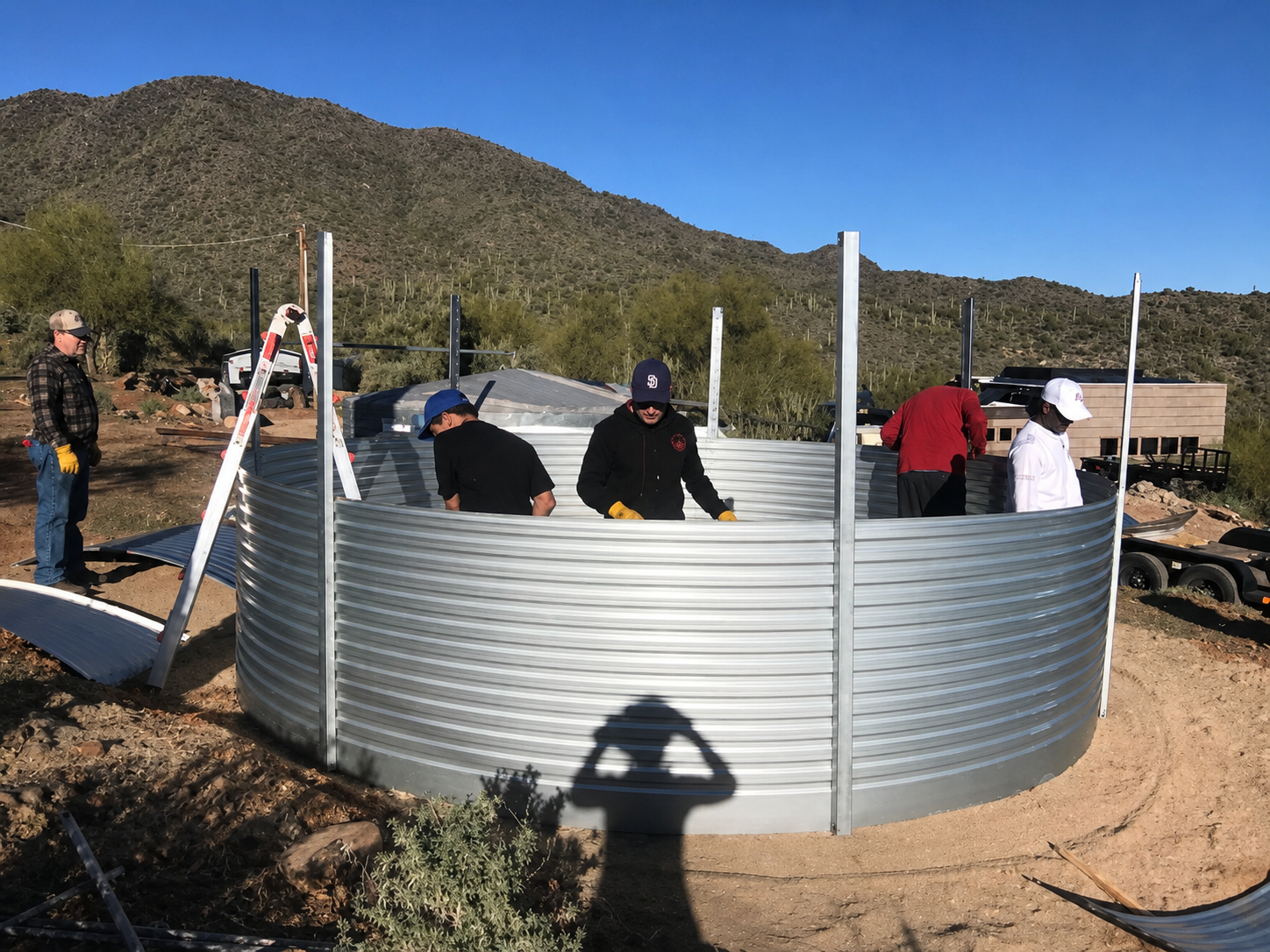
Arizona’s intense UV exposure and heat can place additional stress on water storage systems over time, making material selection and proper installation especially important for long term reliability. Many Arizona property owners choose Pioneer water storage systems for their durability and large-capacity storage applications.
What Property Owners Often Overlook When Sizing Water Tanks
Many property owners focus primarily on daily water usage during the planning process, but long term reserve capacity is often just as important.
Factors frequently overlooked include:
- Emergency backup water needs
- Future property expansion
- Increased irrigation demand
- Fire protection requirements
- Well downtime or maintenance
- Delayed water deliveries
- Seasonal usage spikes
In many Arizona rural properties, undersized tanks create problems long after installation once water demand increases or supply interruptions occur. Many Arizona property owners realize their tank is undersized only after periods of drought, increased irrigation demand, or extended delays in water delivery.
Why Professional Water Storage Planning Matters
Water storage systems involve more than selecting a tank size alone. Proper system planning may also include site preparation, plumbing integration, booster pumps, filtration systems, overflow management, foundation requirements, and local code compliance.
System planning may also involve elevation considerations, pressure requirements, pump sizing, overflow routing, and water turnover management depending on the property layout and storage goals.
Professional water storage planning helps property owners:
- Avoid undersized systems
- Improve long term water reliability
- Reduce unnecessary operating costs
- Maintain water quality
- Prepare for emergency situations
- Improve overall system efficiency
Living Water Industries works with residential, agricultural, commercial, and rural property owners throughout Arizona to design water storage systems tailored to each property’s infrastructure, water usage demands, and long term goals. Property owners with questions about water storage systems can also visit the company’s Frequently Asked Questions page for additional guidance.
Common Water Storage Sizing Mistakes Property Owners Make
One of the most common sizing mistakes is selecting a tank based only on immediate household demand without accounting for future property needs or emergency reserve planning.
Property owners may underestimate:
- Irrigation demand
- Seasonal water usage spikes
- Livestock requirements
- Future property expansion
- Well downtime
- Emergency backup needs
- Fire suppression reserve requirements
Undersized systems can create long-term reliability problems, especially in rural Arizona properties where water availability may already be limited or inconsistent.
Professional sizing evaluations help property owners plan for both current demand and future infrastructure needs while reducing the risk of costly system modifications later.
Why Long-Term Water Storage Planning Matters in Arizona
As Arizona continues facing drought concerns, population growth, and increased pressure on water infrastructure, many residential, agricultural, and commercial property owners are investing in larger and more reliable water storage systems for long-term preparedness.
In many rural Arizona properties, water storage systems are designed not only for daily usage, but also to help maintain reliable water access during drought conditions, pump failures, delayed water deliveries, or emergency situations.
Properly sized systems can also support irrigation demand, livestock needs, fire protection reserve capacity, and future property expansion.
Many property owners now view water storage as part of long-term infrastructure planning rather than short-term emergency backup alone. Professionally designed systems help improve water reliability, support long-term property needs, and reduce dependence on inconsistent supply conditions in Arizona’s desert environment.
Ensuring Lasting Water Reliability for Your Arizona Property
Choosing the correct water storage tank size is one of the most important parts of building a reliable water system in Arizona. Property type, water demand, emergency reserve goals, climate conditions, and infrastructure limitations all influence how much storage capacity may be needed long term.
By properly planning water storage capacity from the beginning, Arizona property owners can improve water reliability, reduce supply interruptions, and create systems better suited for long term performance in desert conditions. Property owners interested in customized system recommendations can contact Living Water Industries for additional guidance and project planning support.
Frequently Asked Questions
How many gallons of water storage does a house typically need?
Many Arizona homes use between 75 and 100 gallons of water per person per day. Residential storage systems commonly range from 1,500 to 10,000 gallons depending on household size, irrigation use, and reserve storage goals.
What size water tank is recommended for rural Arizona properties?
Rural Arizona properties often require larger storage systems because of well production limitations, hauled water delivery schedules, irrigation needs, and emergency reserve planning. Many rural systems range from 5,000 to 20,000 gallons or more.
Are steel or polyethylene water tanks better for Arizona?
Both tank types can perform well in Arizona depending on the application. Steel tanks offer excellent structural durability, while polyethylene tanks provide corrosion resistance and lighter installation weight.
Why is extra reserve water storage important in Arizona?
Additional reserve storage helps property owners prepare for drought conditions, equipment failures, delayed water deliveries, emergency situations, and seasonal increases in water demand.
Can professional tank sizing help reduce long term costs?
Yes. Proper tank sizing helps improve system efficiency, reduce unnecessary equipment strain, avoid undersized systems, and create more reliable long term water management solutions.